- Finishing
- Drywall partitions
- Wojciech Dobry
- October 2026
- about 8 min
- 3:07, Polish captions
Stud partition wall: how many boards, profiles and screws?
For a 3 × 2.6 m partition wall with a door, with one 12.5 mm plasterboard on each side and CW75 profiles every 60 cm, buy 6 sheets of 1200 × 2600 mm, 8 CW75 profiles, 2 UW75 profiles of 4 m and about 240 screws. What changes the numbers most is the number of board layers: a second layer on both sides doubles the boards and screws, and the wall becomes stiffer and better at stopping sound.
How to work it out
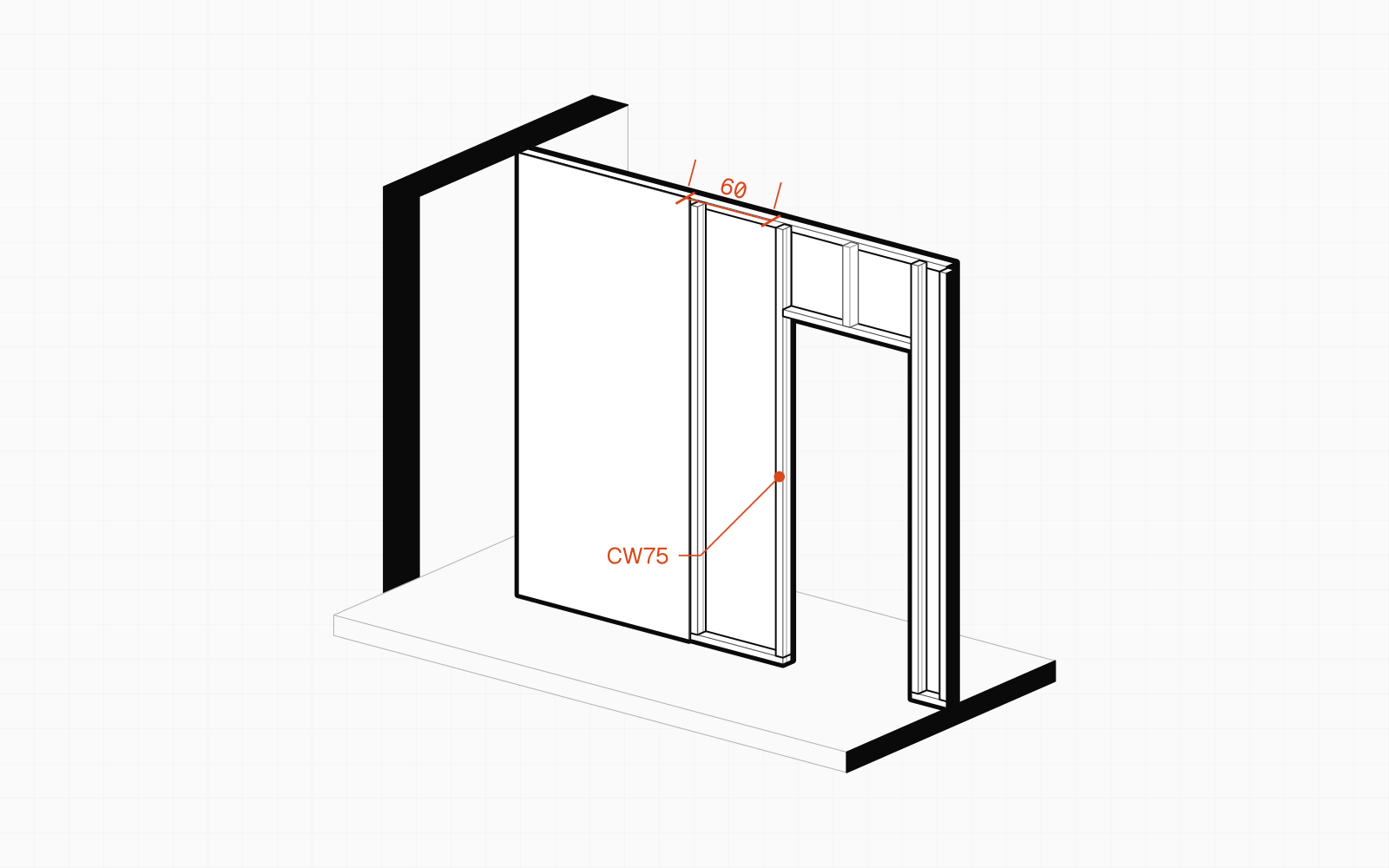
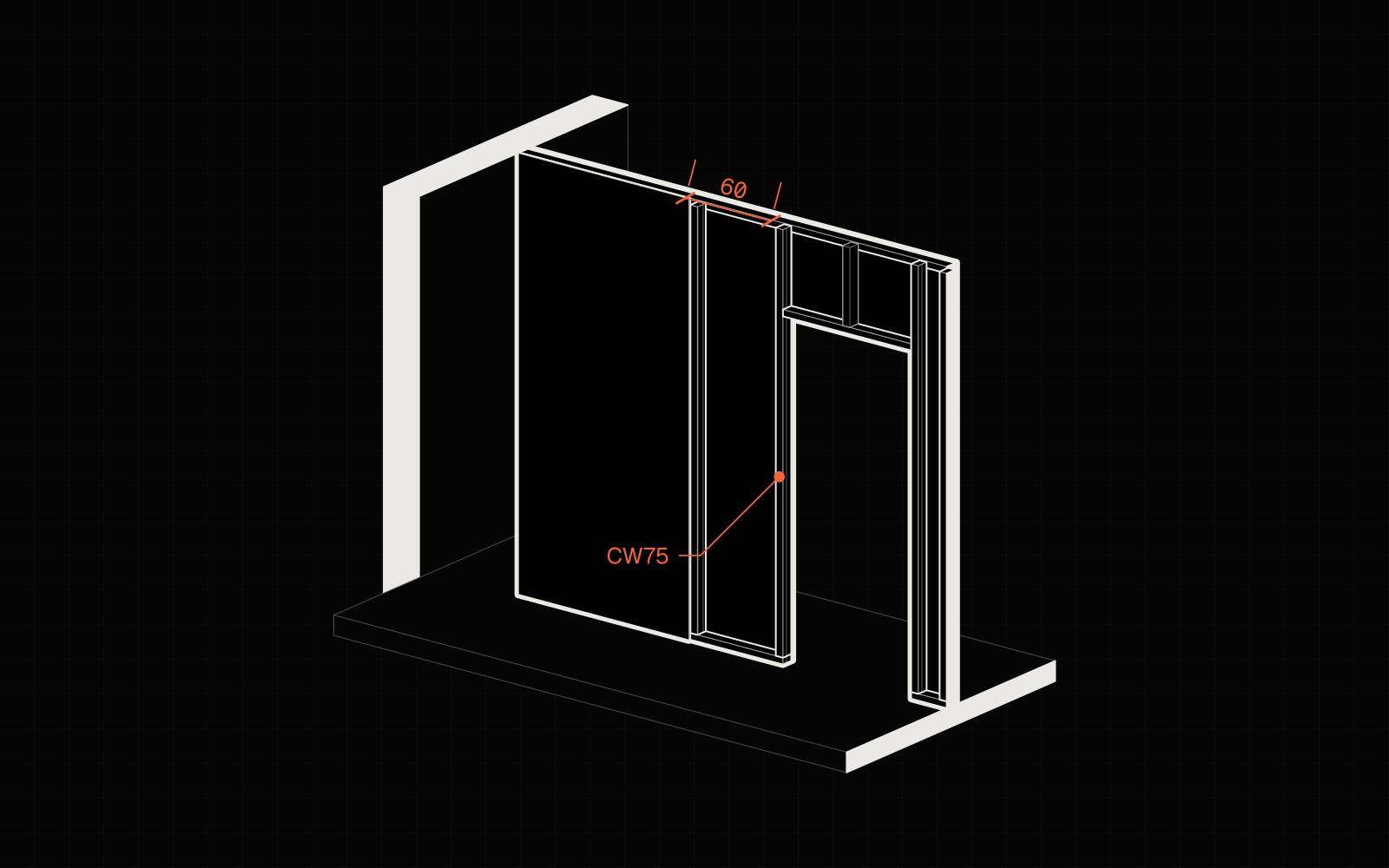
A plasterboard partition (a partition wall on a single frame of metal profiles) is a frame of profiles with boards screwed on both sides. UW profiles are the tracks: they run along the floor and the ceiling. CW profiles are the studs set into the tracks every 60 cm. The boards are screwed to the studs, and wool goes in the middle.
In short:
- CW studs: wall length ÷ spacing, rounded up, + 1. For each door add 2 studs at the door frame. A stud is as long as the room is high (less about 1 cm of clearance).
- UW tracks: 2 × the wall length (top and bottom) less the door width at the bottom, plus a piece over each door (the door width + about 30 cm).
- Boards: wall area less the door × number of sides × number of layers. Check it against the layout: each side needs as many boards as fit along the length of the wall (length ÷ 120 cm, rounded up).
- Screws: with one layer, about every 25 cm along each stud, on each side. Where two boards meet, each edge is screwed separately, so the stud under the joint gets two rows of screws. That comes to about 12 screws per m² of wall on each side, the figure Siniat gives.
- Wool: the wall area less the door, one layer in the middle.
- Sealing tape: under all profiles that touch the floor, ceiling and walls.
Stud spacing is usually 60 cm, because a board is 120 cm wide and its edges then land on a stud. They go closer together (for example every 40 cm) under heavy finishes, such as tiles on a single layer of boards, or where the system requires it.
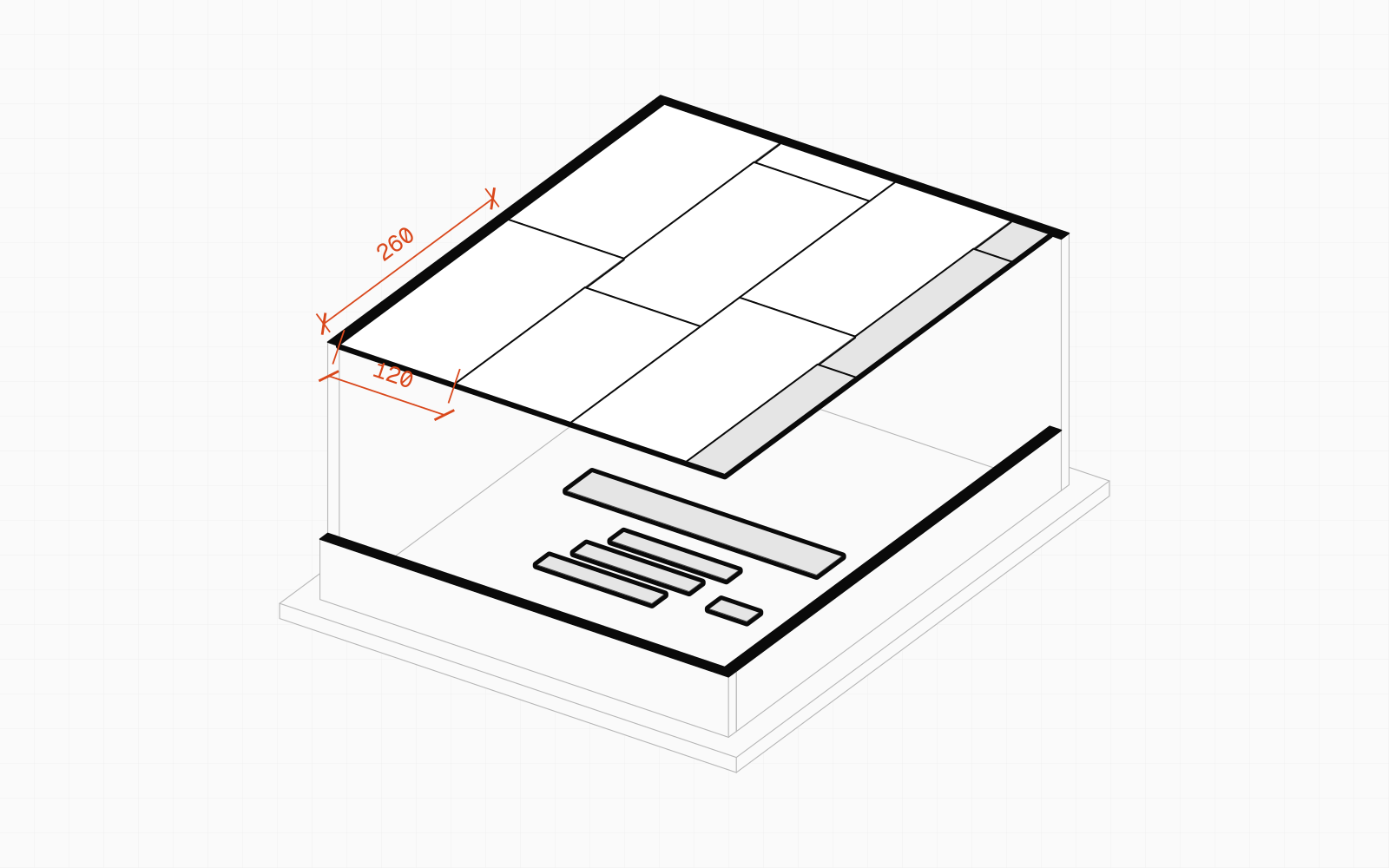
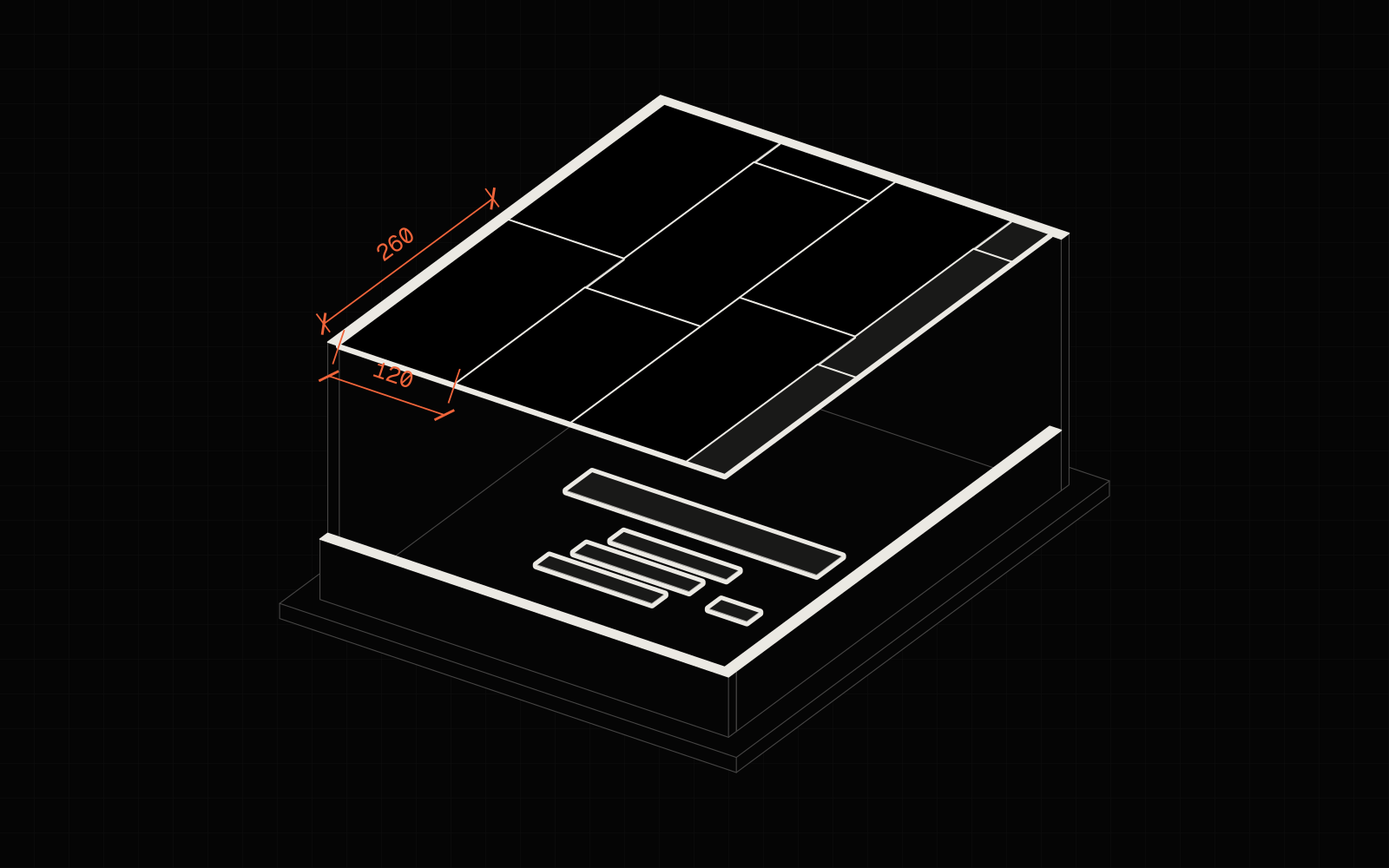
- board 1200 × 2600 mm
- CW studs behind the board
The profile width (CW50, CW75, CW100) is chosen for the height of the wall and the acoustic requirements. A taller wall needs a wider profile. The permitted heights are given in the system data sheet. The number and lengths of profiles are covered in detail in the article how many CW and UW profiles for a partition.
Boards for a bathroom or kitchen should be moisture-resistant (GKBI, type H2), and fire-resistant (GKF) wherever the design calls for fire resistance.
Waste
| Material | What Baukit counts | Why |
|---|---|---|
| Boards | 10% on the area, and whole sheets to buy from the board layout on the wall | The cut-outs for the door and the narrow strips at the end of the wall fit within the sheets you buy |
| CW profiles | whole bars, each stud from its own bar | A 2.6 m stud from a 3 m bar leaves 0.4 m of waste |
| UW profiles | the track length, rounded up to whole bars | The top, the bottom less the door, and a piece over each door |
| Wool | 5% extra | Trimming between the studs |
| Screws, plugs, filler | full packs | Boxes of 100–1,000, bags of 5 kg |
What you buy in boards is decided by how the sheets lay out on the wall, not by a percentage: on the wall in the example, the whole sheets come to more than the area plus waste. Baukit adds no percentage to the UW tracks, because rounding up to whole bars gives the spare. If you cut a lot of narrow strips, or are only just learning to cut boards, buy one extra sheet. These values come from site practice. If you can buy studs cut to the height of the room (for example 2.6 m), the waste on CW profiles almost disappears.
Example: a 3 × 2.6 m partition with a door
Assumptions: a partition 3.00 m long and 2.60 m high, a 0.90 × 2.05 m door (the opening) 0.30 m from one of the walls. CW75 profiles every 60 cm in bars of 3 m, UW75 in bars of 4 m, one 12.5 mm GKB board (standard plasterboard) of 1200 × 2600 mm on each side, 5 cm of wool in the middle. The example in Baukit has the same inputs.
- CW75 studs (3 m)
- 8 pcs
- UW75 tracks (4 m)
- 2 pcs (6.3 m)
- TN screws
- 240 pcs
- Wool 5 cm (7.2 m²)
- 1 pack
- Sealing tape
- 10.3 m
- Area less the door
- 5.96 m²
- Area. 3.00 × 2.60 = 7.80 m², less the door 0.90 × 2.05 = 1.845 m², gives 5.955 m² per side and 11.91 m² of board for both sides.
- CW studs. 3.00 m at a spacing of 60 cm is 5 gaps, so 6 studs, plus 2 at the door: 8 studs of 2.6 m, so 8 bars of 3 m.
- UW tracks. Top 3.00 m, bottom 3.00 − 0.90 = 2.10 m, over the door 0.90 m + 30 cm = 1.20 m. In total 6.30 m, so 2 bars of 4 m.
- Boards. Per side: 3.00 m takes 2.5 boards 120 cm wide, so 3 boards, and 6 boards in all (18.72 m²). The door cut-out partly comes back as offcuts: with careful cutting, 5 boards are sometimes enough.
- TN 25 screws. On a 2.6 m stud every 25 cm: 2.60 m ÷ 25 cm + 1 = 11.4, so 12 screws. The boards are 120 cm wide, so over 3 m there are 2 joints with a double row: (8 studs + 2) × 12 × 2 sides = 240 screws, so one box.
- 5 cm wool. 5.955 m², so 1 pack of 7.2 m².
- Sealing tape. Under the UW on the ceiling and floor and under the end CW studs at the walls: 3.00 + 2.10 + 2 × 2.60 = 10.3 m, so 1 roll of 30 m.
- Plugs. The tracks and end studs are fixed at most every 100 cm, but with at least 3 plugs per profile: about 15 plugs.
- Finishing. Joint filler about 0.4 kg/m² per side (Siniat: 0.6 kg of base filler and 0.2 kg of finishing filler per m² of wall): 11.91 × 0.4 = 4.8 kg, so 1 bag of 5 kg. Reinforcing tape for the board joints and corners: 1 roll.
- GKB plasterboard 12.5 mm61200 × 2600, 3 per side
- CW75 profile, 3 m82.60 m studs
- UW75 profile, 4 m26.30 m of track
- TN 25 screws2401 pack
- Acoustic wool 5 cm1a 7.2 m² pack for 5.96 m²
- Sealing tape1a 30 m roll for 10.3 m
- Plugsapprox. 151 pack
- Joint filler 5 kg1approx. 4.8 kg for 11.91 m² of board
- Joint tape1a roll for joints and corners
With two layers of boards on each side, the number of boards rises to 12 and the screws to about 480. The inner layer is fixed less often, and the outer one with longer screws, for example TN 35.
What it costs
| Material | Typical price | ||
|---|---|---|---|
| Plasterboard GKB (type A) 12.5 mm 1200×2600Pack: sheet 1.2×2.6 m | 10.54 PLN/m²approx. 33 PLN per packexample: 6 packs, approx. 197 PLN9.59–10.73 · 3 shops | 9.59–10.73 | 3 shops |
| Moisture-resistant plasterboard GKBI (type H2) 12.5 mm 1200×2600Pack: sheet 1.2×2.6 m | 14.59 PLN/m²approx. 46 PLN per pack13.46–15.27 · 3 shops | 13.46–15.27 | 3 shops |
| CW 50 wall stud 3 mPack: 3 m length | 4.83 PLN/mapprox. 14 PLN per pack4.72–4.93 · 3 shops | 4.72–4.93 | 3 shops |
| CW 75 wall stud 3 mPack: 3 m length | 5.65 PLN/mapprox. 17 PLN per packexample: 8 packs, approx. 136 PLN5.65–8.97 · 5 shops | 5.65–8.97 | 5 shops |
| UW 50 wall track 4 mPack: 4 m length | 3.93 PLN/mapprox. 16 PLN per pack3.77–5.98 · 4 shops | 3.77–5.98 | 4 shops |
| UW 75 wall track 4 mPack: 4 m length | 4.99 PLN/mapprox. 20 PLN per packexample: 2 packs, approx. 40 PLN4.60–7.98 · 5 shops | 4.60–7.98 | 5 shops |
| TN screws 3.5×25 for plasterboardPack: box of 1000 | 0.04 PLN/pcapprox. 39 PLN per packexample: 1 pack, approx. 39 PLN0.04–0.04 · 3 shops | 0.04–0.04 | 3 shops |
| Acoustic (sealing) tape for profiles 30 mm, 30 mPack: 30 m roll | 0.60 PLN/mapprox. 18 PLN per packexample: 1 pack, approx. 18 PLN0.57–0.61 · 3 shops | 0.57–0.61 | 3 shops |
| Hammer-in plug 6×60 (fixing UW/UD tracks to the wall)Pack: pack of 100 | 0.17 PLN/pcapprox. 17 PLN per packexample: 1 pack, approx. 17 PLN0.10–0.26 · 5 shops | 0.10–0.26 | 5 shops |
| Gypsum jointing compound for plasterboardPack: 5 kg bag | 7.40 PLN/kgapprox. 37 PLN per packexample: 1 pack, approx. 37 PLN6.88–9.98 · 3 shops | 6.88–9.98 | 3 shops |
| Paper joint tape for plasterboard, 75 mPack: 75 m roll | 0.29 PLN/mapprox. 22 PLN per packexample: 1 pack, approx. 22 PLN0.23–0.34 · 3 shops | 0.23–0.34 | 3 shops |
| Acoustic mineral wool slab for partitions 50 mmPack: pack | 9.03 PLN/m²approx. 65 PLN per packexample: 1 pack, approx. 65 PLN8.47–11.25 · 3 shops | 8.47–11.25 | 3 shops |
| Worked example, total | approx. 570 PLN | ||
The “Worked example, total” row is the cost of the materials from the example above: 6 boards, 8 CW75 profiles, 2 UW75 profiles, a box of screws, a pack of wool, a roll of sealing tape, a pack of plugs, a bag of filler and a roll of reinforcing tape, without the door and frame, primer or paint.
The prices in the table are the median of offers from several shops, including VAT, with a date. Items without a current price are marked. The boards, screws, filler and tapes are the same as for a suspended ceiling, so if you are doing both, buy them together.
Work it out in Baukit
Open in Baukit- Click “Open in Baukit”. A room opens with a 3 m plasterboard partition with a door and the notebook open.
- Select the partition. The notebook shows the boards, the CW studs and UW tracks in bars, the screws, wool and tapes.
- Change the wall type to two layers of boards on each side and watch the boards and screws go up.
- Change the length of the partition or move the door: the studs are worked out again.
- You open the notebook with the “Notebook” button in the bottom left corner or by pressing 4.
The same drawing also works out a suspended ceiling in the same room, with the same boards and screws.
Frequently asked questions
How far apart should CW studs be in a plasterboard partition?
Usually every 60 cm, because a board is 120 cm wide and its edges then fall on the studs. They go closer, every 40 cm, under tiles on a single layer of boards or when the system requires it. At a door you add studs at the door frame.
How many plasterboard sheets for a partition wall?
Work out the wall area less the door, multiply by 2 (two sides) and by the number of layers, then check against the layout: each side takes as many boards as fit along the length of the wall. A 3 × 2.6 m partition with one layer on both sides takes 6 sheets of 1200 × 2600 mm.
How many plasterboard screws for a partition?
With one layer, the screws go about every 25 cm along each stud, and at board joints separately for each edge, which is about 12 per m² on each side. A 3 × 2.6 m partition with a door and one layer on both sides takes about 240 TN 25 screws. With two layers the number roughly doubles.
CW50, CW75 or CW100?
A wider profile allows a taller wall and thicker wool, so better sound insulation. In a house, for walls about 2.6–3 m high, CW75 is the most common choice. The exact permitted heights for a given profile and number of layers are in the system data sheet.
Do you need wool in a plasterboard partition?
You don't have to, but without wool the wall stops sound poorly and sounds hollow. Acoustic wool about 5 cm thick in a CW75 profile costs little compared with the whole wall.
Related
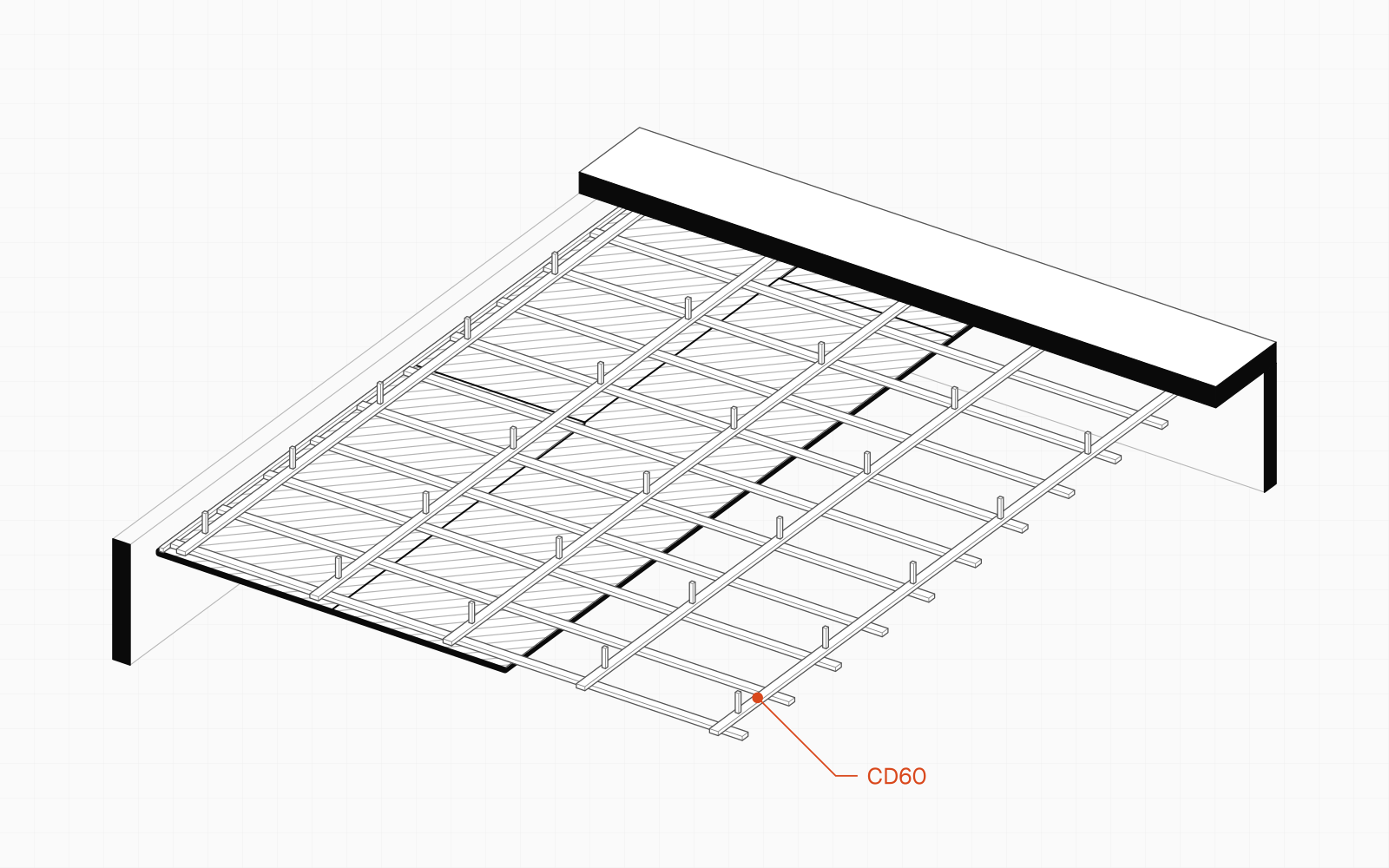
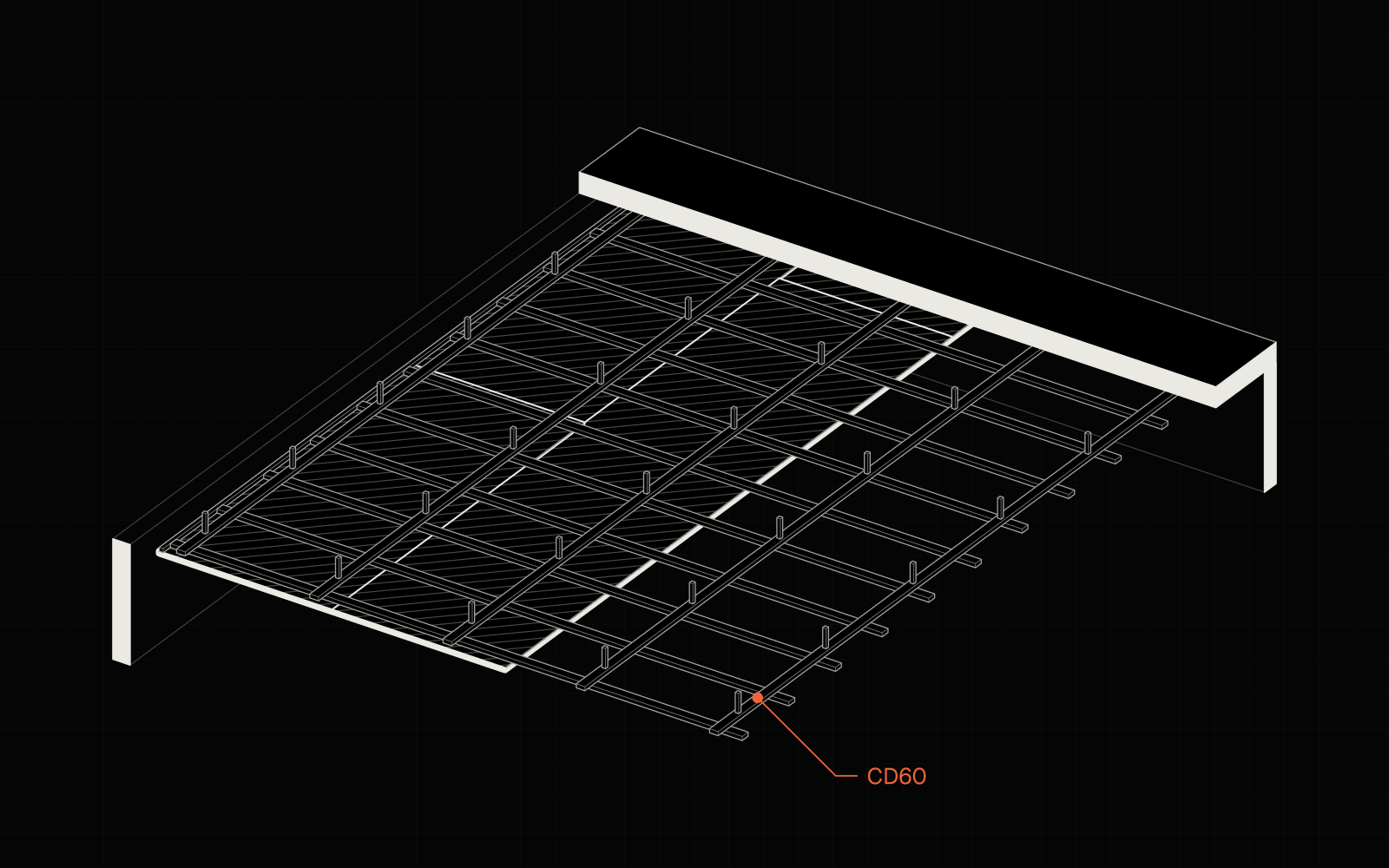
- Plasterboard suspended ceiling: how many profiles, hangers and boards
- How many plasterboard sheets for a ceiling
- How many CW and UW profiles for a partition? Formula and a 3 × 2.6 m example
- Cost of a plasterboard partition wall per m²
4 sources
- Drywall system manufacturers' guidelines for partition walls on a single CW frame (technical data sheets; in Polish): CW stud spacing, UW track fixing, screw spacing, permitted wall heights (not checked).
- Siniat, ściana działowa Nida Ściana, instrukcja montażu (installation instructions, in Polish; https://media.siniat.pl/pi38188/original/73883098/siniat-sciana-dzialowa-instrukcja-montazu.pdf, read on 13 October 2026): per 1 m² of wall on a single frame, 24 screws 3.5 × 25, 0.6 kg of base filler and 0.2 kg of finishing filler, without material losses.
- Prices: Baukit reference prices, the median and range of offers from at least two shops, collected on 9 October 2026.
- Example: Baukit calculation, 11 October 2026.